

Novels About the Cascadia Subduction Zone
A reader's guide to seven novels about the Cascadia Subduction Zone earthquake: who wrote them, what kind of story each one tells, and where you might want to start.
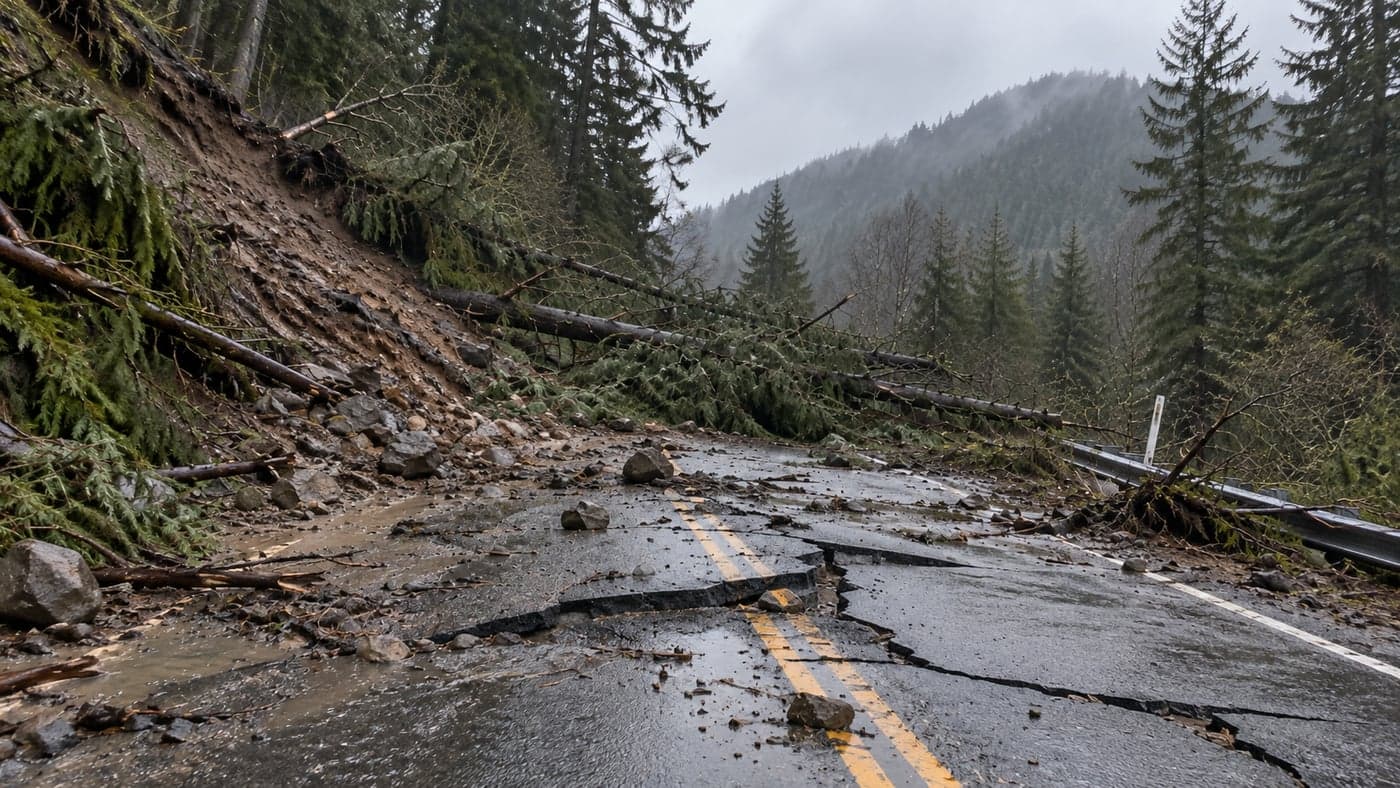
When I was writing Crossing Cascadia, I spent a lot of time thinking about the practical details of a Cascadia earthquake. Not just the geology, but the smaller questions that follow it. How far could someone realistically walk once the bridges were gone? What would people eat? Where would they sleep? How helpful would strangers be after a day? After three?
Eventually I started looking for other novelists who had asked the same kinds of questions.
There are more Cascadia earthquake novels than I expected, and they approach the disaster from surprisingly different directions. Some follow scientists who know what is coming and cannot convince anyone to listen. Others stay close to ordinary people who know almost nothing until the ground starts moving. There are thrillers, survival stories, a middle-grade novel, and one told by a pregnant woman to her unborn child.
The earthquake is the same. The stories are not.
Here are the seven Cascadia novels I know of, in publication order.
Saving Cascadia, John J. Nance (2005)
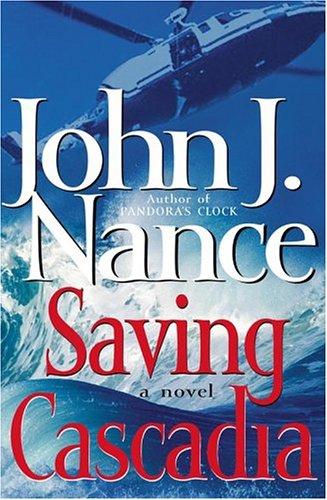
John J. Nance came to the book with an unusual resume for a disaster novelist. He is a longtime airline captain, a former Air Force pilot, and an aviation analyst for ABC News. He knows his way around emergencies.
Saving Cascadia has the scale and momentum of a classic disaster movie. A developer is preparing to open a resort and casino on an island off the Washington coast. A seismologist believes the island is in danger and suspects the construction project itself may help trigger a catastrophe.
Naturally, almost nobody wants to hear that.
Once the earthquake arrives, the story gets very big very quickly, culminating in an attempt to evacuate hundreds of people by helicopter as conditions deteriorate.
Read it if: you want a large-scale disaster thriller with scientists, warnings, evacuations, and a clock ticking in the background.
Lockdown, Maggie Bolitho (2014)
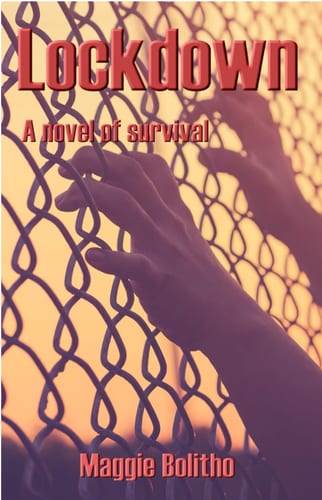
Maggie Bolitho grew up on an island in the Pacific Northwest and has lived in British Columbia, which gives Lockdown a strong sense of the region it is about.
Rowan's father has spent years preparing his family for disaster. She knows first aid. She can fish and hunt. Their property is stocked and protected.
Then the earthquake happens.
Her father is in the hospital. Her mother is missing. Rowan is left behind an electrified fence with her younger brother while the people outside become increasingly desperate.
What makes the premise work is that Rowan is not helpless. She has been trained for exactly this kind of emergency. The problem is that knowing how to prepare for a disaster and knowing how to live through one turn out to be very different things.
Read it if: you like survival stories about preparedness, difficult choices, and what happens when the supplies you carefully stored suddenly become valuable to everyone else.
It is written for younger readers, but adults who enjoy disaster fiction will find plenty here too.
Subduction Zone, Colin Setterfield (2014)
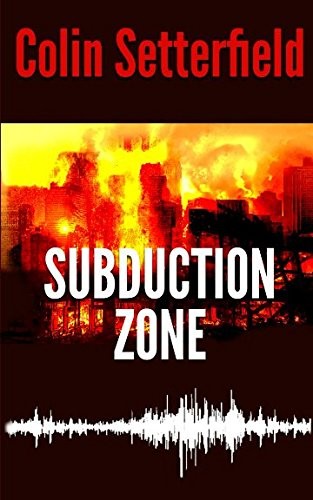
Subduction Zone is probably the least familiar title on this list, and it is also one of the stranger combinations.
A seismologist in Victoria becomes convinced that a major Cascadia rupture is coming. At the same time, a drug operation near Tofino has placed some dangerous people uncomfortably close to his seismic monitoring equipment.
Then the earthquake hits.
From there, the book becomes part disaster novel and part crime thriller, with its main character trying to protect his family while staying ahead of people who were dangerous even before the landscape started falling apart.
Read it if: an earthquake by itself does not provide quite enough trouble for your taste.
Cascadia, H.W. "Buzz" Bernard (2016)
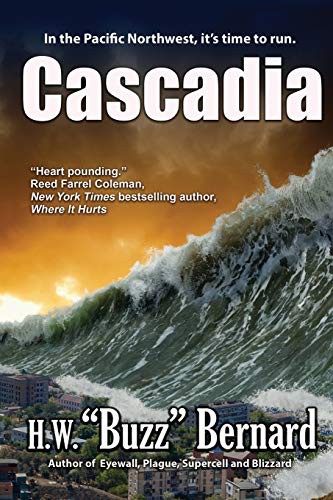
H.W. "Buzz" Bernard is a native Oregonian, a former Air Force weather officer, and a longtime meteorologist who spent thirteen years at The Weather Channel.
His novel begins with an unusual problem for a scientist: his geologist knows the earthquake is coming because he keeps dreaming about it.
He has the same dream again and again. Eventually he becomes convinced enough to go public, which puts him in the awkward position of being right for a reason no respectable scientist can defend.
That tension gives Cascadia its hook. There is plenty of earthquake here, but the story is also about credibility, professional reputation, and what happens when someone knows something without being able to prove how he knows it.
Read it if: you like science thrillers but do not mind something uncanny slipping in around the edges.
The Disaster Days, Rebecca Behrens (2019)
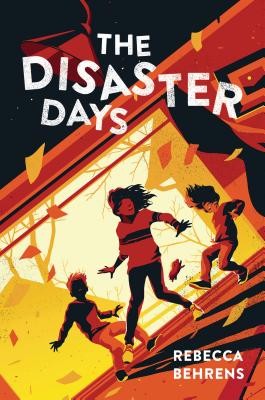
Rebecca Behrens wrote The Disaster Days for middle-grade readers, but adults interested in Cascadia fiction should not automatically skip it.
Thirteen-year-old Hannah is babysitting two younger children on an island near Seattle when the earthquake hits. Suddenly there is no power, no phone service, and no adult coming to take over. The children are injured. The house is damaged. Hannah has very little food or equipment and has to keep all three of them alive until help arrives.
The scale is smaller than in many earthquake novels, and that is one of its strengths. Hannah does not have access to seismic data, government briefings, helicopters, or rescue teams. Her world has shrunk to two frightened children and the next problem in front of her.
Behrens is especially good at the uncomfortable part of being responsible for other people when you do not feel remotely qualified to be.
Read it if: you are looking for Cascadia fiction for a younger reader, or if you simply like survival stories where the characters have to solve ordinary problems under extraordinary pressure.
Crossing Cascadia, Brad Reed (2021)
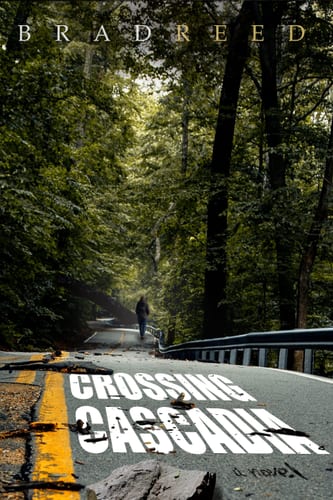
This one is mine, so I will leave the verdict to other readers.
I wrote Crossing Cascadia while teaching high school English on the Oregon coast, and I wanted to tell the earthquake story from the ground rather than from a command center or a seismology lab.
Martha Beckstead has recently taken a job that her husband wants her to quit and that the leaders of her church do not approve of. She is supposed to be finishing her last day when the Cascadia earthquake strikes.
She is about a hundred miles from home.
The bridges are down. The coast has been hit by a tsunami. There is no functioning transportation system waiting to take her back. So Martha starts walking.
The journey carries her through the Oregon Coast Range toward her husband and children, but the physical trip is only part of the story. The disaster also forces her to examine a marriage, a church, and a faith she had previously been able to accept without asking many questions.
Read it if: you prefer disaster fiction at human scale, with one ordinary person trying to get home rather than experts trying to save a city.
Tilt, Emma Pattee (2025)
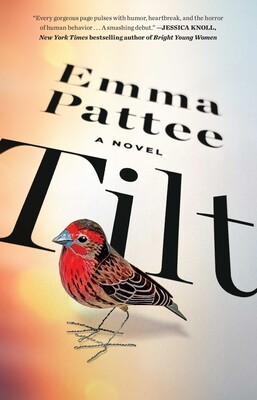
Emma Pattee's Tilt brought Cascadia fiction to a much larger literary audience.
Its setup is wonderfully simple. A pregnant woman is shopping for a crib at IKEA when the earthquake destroys much of Portland. She leaves the store and starts making her way across the city toward her husband.
The novel is narrated as an address to the child she is carrying, which changes the feeling of the whole journey. The ruined city matters, but so do pregnancy, marriage, fear, memory, and the strange realization that the person she is trying to protect is someone she has not met yet.
It is leaner and more literary than most of the books on this list, but it never loses the basic momentum of a survival story.
Read it if: you want a literary novel that happens to take place in the middle of an enormous earthquake.
So where should you start?
It depends on what kind of book you want.
For a big, traditional disaster thriller, start with Saving Cascadia.
For younger readers, try The Disaster Days or Lockdown.
For something with a crime-thriller streak, there is Subduction Zone. If you like a little supernatural uncertainty mixed into the science, try Cascadia.
If you want the newest and most literary take on the subject, Tilt is the obvious choice.
And if the part of Cascadia that interests you is what happens after the shaking stops, when an ordinary person has to figure out how to get home through a landscape where the normal ways of getting anywhere no longer exist, that is the territory I explored in Crossing Cascadia.
Reading several of these books together is interesting because you can see the genre changing.
The earlier novels often begin with knowledge. A scientist sees the danger coming. The tension comes from whether anyone will listen.
The newer ones tend to begin with ignorance. The earthquake simply happens, and the character standing in the middle of it has to understand the new world at the same time the reader does.
Neither approach is necessarily more frightening.
They just put the fear in different places.
If there is another Cascadia earthquake novel I have missed, send it my way. I would like this list to be complete.
Read Crossing Cascadia
Brad Reed’s debut survival novel, set against the Cascadia Subduction Zone earthquake.